Saturday, 28 December 2013

Deconstructing Film Trailers

Deconstructing film trailers
 Trailers are defined as a promotion to a film which is then exhibited in future cinema. Trailers are used in order to advertise film material. Our film trailer is a psychological horror which is useful since there are many horror films to deconstruct. Some good directors include James Wann, Alfred Hitchcock, James Whale etc. 

Some main film trailers are The Purge, The devil inside and The conjuring. These have been successful movies making thousands of dollars down due good advertisement from the film trailer. Film trailers have key features a lot of authors tend to stick by, these include;
- The quick cut
- The opening sound
- The motion graphics
-The voice over
- Post production e.g. Editing
- Addressing the target audience


The Quick cut
a cut is a form of editing, it is the splicing of 2 shots together.  A cut is made by the film editor at the editing stage of a film. Between sequences the cut marks a rapid transition between one time and space and another, but depending on the nature of the cut it will have different meanings. The cut is one of the most used editing techniques which helps to reduce timing, fit a sequence together and  help the audience establish a narrative. This is especially important in the horror genre as it helps to create a suspense.

The Opening sound
 The opening sound is one of the most important features in a film trailer as it helps to establish the genre or even sub genre and has to fit well with the piece unless it is going for a juxtaposition e.g. for our psychological film trailer we will use a combination of 'happy and scary music'.

The motion graphics
The motion graphics are one of the most important features of the trailer. This is all of the mise-en-scene the audience will see and experience, they will get familiar with characters, settings, personalities and the narrative of the piece. Even the audience experience audience pleasures such as escapism from watching the trailer and thinking 'I want to see that film'.

Voice over (optional)
a voice over is optional in a trailer but used in many film trailers to help enhance the imagery in the persons mind, a voice over usually asks rhetorical questions which makes the viewers think more about the trailer for example 'what would you do if there was a demon in your house?. Moreover a voice over helps to make the narrative easier to understand and make the audience think more deeply into it.

Post production
Post production is a very broad category as it includes all the editing of the piece. Some editing techniques include ellipsis, iris, eyeline match etc. This is extremely significant in film making as it makes the final piece perfect with the idea coming to life. Post Production is the term for the final stage in film making in which the raw material (shot by the Camera crew and recorded by the Production Sound crew) is edited together to form the completed film.  The processes involved in Post Production include: picture editing, sound editing, composing and recording the score, music editing, adding visual special effects, adding audio sound effects such as Automated Dialogue Replacement (ADR), Foley (Post-synchronised sound effects), sound design, sound mixing, colour grading, titles design, and negative cutting.

Addressing the target audience
with any film you need to go back to basics and decide who your target audience is. This is crucial because then the development of the film process comes later when deciding which age rating and what time its shown in cinema etc. Our target audience is mainly projected at 16-21 year olds because its mild horror.

Wednesday, 4 December 2013

Psychological Film trailers

Some examples of Psychological film trailers

My film trailer is going to be in the sub genre Psychological horror. A psychological horror is one that relies on characters fears and emotional instability to build tension.
Some examples include films such as The Lovely Bones, Childs Play, The Haunting.

The Lovely Bones
it may not traditionally sound like a psychological horror/ thriller but the clue is in the word 'bones'.
It was given a certificate of a 12A but there have been complaints in the news about whether the rating was suitable.

BBC NEWS

Lovely Bones drew most complaints to UK ratings body

The board that classifies films for UK distribution received more complaints about The Lovely Bones than any other 2010 movie, it is revealed.

The decision to give Peter Jackson's film a 12A rating resulted in the British Board of Film Classification (BBFC) receiving 24 objections.

The film is about a murdered girl who watches over the lives of her family and her killer from the afterlife.

"Many found it to be a shocking and upsetting experience," the BBFC said.

According to the BBFC's annual report, the film - based on Alice Sebold's novel - was "right on the borderline" between a 12A and a 15.

But because it "lacked any explicit detail of the murder" and "had many positive messages about life", the decision was made to give it the lower certificate.

Other films to prompt complaints included Kick-Ass, a comic book action film about a young man who decides to become a superhero.

Its graphic violence and the use of very strong language by a child character resulted in Matthew Vaughn's movie receiving 21 complaints.

The BBFC justified its 15 rating because there was "a lack of focus on injuries and suffering" and "an absence of any sadistic or sexualised element to the violence".

"The Board's view was that the fantastical and tongue-in-cheek nature of the situations would be self-evident to most audiences," its report states.

Toy Story 3, Harry Potter and the Deathly Hallows Part 1 and Disney's The Princess and the Frog were among the other 2010 releases to generate complaints.

The BBFC also received letters about disruptive cinema audiences, ticket prices and rude box office staff, as well as requests that it indicate whether films advertised as comedies were actually funny.

Wednesday, 13 November 2013

Herald and Post

Visiting Herald and Post

We made arrangements to visit Herald and Post on Friday the 19th of September  which then we could get more information and as our story is based on a journalists point of view of the clown so we could get direct insight in what it is like to be a journalist and how they have been tracking the story. It was really informational, and Steve gave us what he thought about the clown and the mystery behind the story.

We found out some very explicit information about The Northampton Clown such as all the theories behind who he was. It was very interesting to see how a journalist approached the story and it was a big story for the paper so we went at the right time. Our editor Steve told us about how he found out about the story which was through his sons and Social networking sites such as Twitter and Facebook. Here is a link to his Facebook page. The journalists Steve and Anna said they went out every night to try and spot the clown and write up a story about where he was.

The clown has put northampton on the map and it was significant the location was Northampton. Northampton has a lot of eerie history. Northampton has a lot of medieval and historical buildings which adds to the suspense of the clown being there. With the Norman Conquest of England the town rose to its national significance; its geographical location in the centre of England made Northampton a valuable strategic point for government and as a convenient meeting place for political social and military events. This gave Northampton a lot of sacred history and for the people who lived there, there was some recognisable locations around Northampton where he was such as Elm Street, The Iconic National lift tower, and Abington Lake Park.

The Northampton clown went worldwide with newspapers from Canada, Australia and Germany coming into Herald and Post and getting the latest information. It has been an extremely eerie event with the continuance of the journalists trying to unmask the clown. a recent story said the clown was unmasked as a university student. It had been discovered that the clown appeared on Friday the 13th which is significant in the horror genre. He was supposedly dressed as Pennywise from Steven Kings famous film 'IT'. It has been said that the clown reappears every 27 years which made the story even more gripping.


Here is a clip of Steve (The journalist working on the story) talking to other journalists about the Northampton clown.


Friday, 8 November 2013

Inspiration of Film trailer

Inspiration

My inspiration for the horror genre and to do a story based on a clown came from the recent story of the 'Northampton Clown'. This story gained a lot of attention from people around the world with many people posting on the clowns supposed Facebook page. A small prank gone viral had hit many newspapers including The Daily Mail, The Independent and Huffington and Post. I think this idea is great as clowns are meant to be fun and exciting however they have become scary with many people having phobias over them.

An insight into the story
The story first came about in Early September where the mysterious clown started popping up in random places around Northampton. The Facebook page 'Spot Northampton's Clown' had many posts giving people clues where he was. At the end of each post was 'Beep Beep!' which is heavily referenced to Steven Kings IT. The clown was receiving a lot of media attention from newspapers all over the world. This made Northampton famous overnight with even tourists visiting the clown in hope that they will see him. The clown made startling headlines such as 'Creepy clown terrorises Northampton' and 'Terrifying clown strikes Northampton'. It grabbed my attention as this was such a striking true event that it would be great for a horror trailer!

Our story
Our story will be based on the Northampton clown story however with a twist. I like how the story is current and how we can mention this in our evaluation.


Spot Northampton's Clown Facebook Page - https://www.facebook.com/spotnorthamptonsclown


Wednesday, 23 October 2013

Genre


What is a genre?
Genre is a way of categorising a particular media text according to its content and style.
There are Hybrid and Sub genres
Hybrid Genres:Rom Com (Bridget Jones)Action Thriller (Taken)Horror Thriller (Sweeny Todd)Action Comedy (Knight and Day)
Sub Genres:Drama- Soaps (Eastenders)Horror- Slasher (Scream)Drama- Coming of age (Juno)Supernatural (Twilight)


Our chosen Genre - Horror - Sub genre - PSYCHOLOGICAL HORROR.
My inspiration for Horror comes from the fact Horror is a genre people are myseterious about, the curiosity of being terrified engages many people including myself. Psychologically horrors are gripping and people like to divert from reality to see what a dangerous thrilling world could be like. It can prevoke many emotions and stay in peoples mind by them thinking what will happen after this? They empathise with the characters in the situations and violently shout at the screen 'Hes behind you!'.
Codes and Conventions
Codes are system of signs which create meaning. They can be divided into two categories
Technical codes are all the ways in which equipment is used to tell the story in a media text for example camera work in a film.
Symbolic codes show what is beneath what you see. e.g. how the character acts and his/hers actions determine their feelings.
Conventions are the generally accepted ways of doing something
There are general convetions in any medium such as the use of inteviewee quotes in a print article but convetions are also genre specific.

Conventions of the Horror genre
Stranded location - The characters are in a location where no one can help them e.g. in a wood. When the evil comes callin'. You know what they say about space. (Alien) The setting tends to be dark and sometimes is set where the character has a dark past.
Technical conventions
High and low angles - dominance and innocence
Point of view shots - see it through the creatures eye
Handheld - feel or terror and realism (Paranormal activity)
Extreme close up for victims
Ambient diegetic sound - footsteps and heartbeats
Fear of death
Typical characters - Usually a form of a Hero or Protagonist in the piece which must embark on a form of mission to kill/solve the problem at hand. Traditionally this role is taken by the male yet from time to time it can be taken on by the female.
other typical characters include the villian and creature itself.
Age and Character - Children are often portrayed as sinsiter in horror movies, they interact with the demon or even cause the event to happen. E.g the Ring and Let the right one in. In this way they are juxtaposed as normally they are represented as innocent.
Type of monster -Psychopath, Ghost, zombie, werewolf.
Props - E.g. Knife, chainsaw, razors (Sweeney Todd)
In some horror films there are connections with the Supernaural world e.g. Oujia boards to connect with the Spirits, or objects to awake the dead e.g. The Mummy.
Religion and Horror movies - Religion is nearly always intercepted in Horror films and props are a big hint to give religion away - E.g. Crucifix or Bible in an exorcism.
Fear of monsters help the audience to relate to the characters with dealing with them. The monsters that are Human may be psychopaths or even serial killers who have mental health problems. The horror movies can convey them as bad which may be an issue to consider.
Typical Themes
Revenge
Childhood issues
Depression
Science gone wrong
Religion
Insanity

Tuesday, 15 October 2013

History of Film Trailers

History of Film Trailers
A film trailer is a vital piece of marketing for feature films. Usually shown at the beginning of a film of a similar genre in the cinemas – but shown also on television and at the beginning of DVD’s and Blu-ray – they advertise up-coming films to attract the attention of their target audiences. Film trailers give a small snapshot of what will happen in the film to engage the target audience. For example a comedy would have fast paced editing with catchy music. In a horror the music would be
eerie and the editing slow and have de saturated light

The first promotinal trailer was not for a feature film it was actually a promotional reel for a musical produced by Nils Granlund which showed excerpts of production and raised awareness of it. Granlund also created the first trailer for a film in 1914 which was produced by for a Charlie Chaplin film. Up to the late 1950s film trailers were made by the National Screen service which was contracted by the film companies to create the trailers for upcoming films and the company lasted unti the 80's. The early trailers consisted of short clips showing the key features from the film alongside narration a big score soundtrack and screens with text and a cast run. An example of this type of trailer is one for the Casablanca.

As films started to change in the 60s so did trailers. The more liberal, freer, types of films would need to be adversed differently. The new breed of films spawned new trailers with new styles and new ways.

Andrew J Kuehen was a very influential film trailer producer. He changed the way trailers were made in his 1964 trailer for Night of the Iguana which is when he created Kaliedoscope Films. The company worked for decades creating some of the biggest film trailers for the biggest films and film makers of the time including many Speilburg films for example Kuehen produced the original trailer for 'ET'.

Trailers tend to have a linear pattern so they dont confuse the audience. They start with equilibrium and end up with disequilibrium resulting then in equilibrium. Some people suggest the best bits of the film are put into the trailer. Some trailers also include sequences that are not in the film. This is most famously seen in the six minute trailer for Hitchcocks 'Psycho' in which the whole trailer is shot post-production and even included a different actress for the main role. However some things are in the trailers from the original film. An example of this is 'Spiderman' in which there is a scene of criminals near the World Trade Center , where the film was released soon after the terrorist attacks when the area was still very sensitive.

The 1960s film trailers
Still used bold flashing words
tried to build on famous actors' names
used narration to summarise the story
often showed the ending of the movie in order to reveal an exciting effect

The 1970s film trailer
were still long, but tigthened a bit
revealed less of the story but still showed many key or spoiler scenes
enjoyed teasing us with mis-edited scenes often out of order                                                                                                   (1950s) 3d glasses

The 1980s film trailer
more abruptly edited
told very little about the movie
often included scenes that were cut from the final edit of the film
no spoilers and instead total mystery about the endings
began to reveal in catchy tag line.


Music Video Function

How does music video function as a marketing and promotion tool within the popular music
industry? How important is video? Did video kill the radio star?

The media is so diverese in the 21st century we can do almost anything with our diverse technology.Music videos are the most powerful marketing tool to help artists showcase their talent and uniqueness. A music video can also spawn buzz in the industry and help musicians gain exposure. The music video has progressed over time and now has become the most successful marketing tool in promoting artists. For example 'Odd Future' have many music videos expressing their idenitity by 'Tyler The Creator' doing bizzare things such as eating a cockroach and throwing up in his music videos. Music videos are a short film integrating a song and imagery, produced for promotional or artistic purposes. Obviously the music video is going to be a powerful marketing tool as it can advertise on many different mediums e.g. TV, Internet, billboards which then attracts a mass of people where they can then share the video and the arists can become recognisable over night.

1926-1959 - The era of Talkies, soundies and Shorties
In the early period of 1920s many musical short films were produced.

1960 - 1973 - Promotional clips and others
In the late 1950s the Scopitone, a visual jukebox, was invented in France and short films were produced by many French artists, such as Serge Gainsbourg, Françoise Hardy, Jacques Brel, and Jacques Dutronc to accompany their songs

1974-1980 - The long bristsh Tv hit show Top of The Pops  began playing music videos in the late 1970s, although the BBC placed strict limits on the number of 'outsourced' videos TOTP could use. Therefore a good video would increase a song's sales as viewers hoped to see it again the following week.In 1980, David Bowie scored his first UK number one in nearly a decade thanks to director David Mallet's eye catching promo for "Ashes to Ashes"

1981-1991 - Music Videos go mainstream
In 1981, the U.S. video channel MTV launched, airing "Video Killed the Radio Star" and beginning an era of 24-hour-a-day music on television. With this new outlet for material, the music video would, by the mid-1980s, grow to play a central role in popular music marketing. MTV has now 24 hour music videos everyday. In 1983, one of the most successful, influential and iconic music videos of all time was released: the nearly 14-minute-long video for Michael Jackson's song "Thriller", directed by John Landis. On March 5, 1983, Country Music Television, or CMT, was launched,[31created and founded by Glenn D. Daniels and uplinked from the Video World Productions facility in Hendersonville, Tennessee

Music videos are the key to all advertisement of Artists. As an audience we enagage in the Arists life and look at their persona shown in their music videos. The video is the most important as it is the visual stimulus which makes us decide whether we like this person based on Apperance voice and character.

Short of the week

Short of the Week - New Boy

Narrative: Whats the plot and what is the story?
When researching short films we had to look at specific aspects which make it unique. Short films can last for a duration of around 2-15 mins. Short films can be professional or amateur productions,
Short films are often screened at local, national, or international film festivals. Short films are often made by independent filmmakers for non profit, either with a low budget, no budget at all, and in rare cases big budgets. Short films are usually funded by film grants, non profit organizations, sponsor, or out of pocket funds. Short films can be apart of any genre and anyone can produce them.
There are some key aspects of short films:
An Exciting & Original Idea


  • A Strong Script
  • Good Acting
  • High Production Values
  • Make It Short
  • Strong Beginning
  • Avoid Repetition & Punchline Twists
  • Exciting New Techniques & Style
  •  Features of editing
  •  Easy to follow however with complexity.

  • New Boy
    New boy is a childhood drama about a young boy from Rwanda who joins a primary school in Ireland. This short film is extremley good as it includes comical aspects as well as outlining serious issues. "The new kid in class looks different—he’s from Rwanda—and when the other kids start to tease him, it calls up memories of a violent past" Quoted from the director. It uses good editing techniques e.g. many cuts and the lighting and color-correction work during the Rwandan flashback sequences is stunning as well.


    Short film: A day in the life of a sixthformer

    We have learnt a lot about short films in the past few weeks and how they are constructed composed and which theories can apply to short films e.g. Todorovs Theory.
    Here is my short film on A day in the life of a sixthformer


    Tuesday, 8 October 2013

    Music video directors

    Music Video Directors and Auteur Theory

    Auteur theory, theory of filmmaking in which the director is viewed as the major creative force in a motion picture.Auteur Theory suggests that a director can use the commercial apparatus of film-making in the same way that a writer uses a pen or a painter uses paint and a paintbrush. The term auteur originates from France which translates as author which means that a directors film reflects their creative vision. The Auteur theory was introduced in the 1950s by French film directors like Francois Traffaut who advocated a focus on the contribution directors made on style and form of film he quoted
    "a true film auteur is someone who brings something genuinely and personal to his subject instead of producing a tasteful, accurate but lifeless rendering of original material".

    Spike Jonze
    Spike Jonze is an American director, producer, screenwriter and actor, whose work includes music videos, commercials, film and television. Jonze is well known also for his music video collaborations with Weezer, Beastie Boys, and Björk. He was also a co-creator and executive producer of MTV's Jackass.
    Hype Williams
    is an American music video and film director. A signature style used by Williams throughout the vast majority of his videos (shot mostly with cinematographer John Perez) was the Fisheye lens which distorted the camera view around the central focus.
    Another "signature style" involves placing shots in regular widescreen ratio, while a second shot is split and placed in the upper and lower bars. 
    Hype Williams Nicki Minaj Video

    Tuesday, 17 September 2013

    Dates in the development of the film trailer

    Significant dates in the development of the trailer

    Trailer
    The Pleasure Seekers , opening at the Winter Garden Theatre on Broadway 1913 - again linked to muscial theatre.
    Silent film - rise of the star 'Charlie Chaplin'
    National Screen Service (1920s-80s)
    1960s - introduction of montage, quick editing - directors influenced by short film
    What is the future of trailers?
    First instagram trailer has been released of only 15 seconds
    Release of 3D Trailer

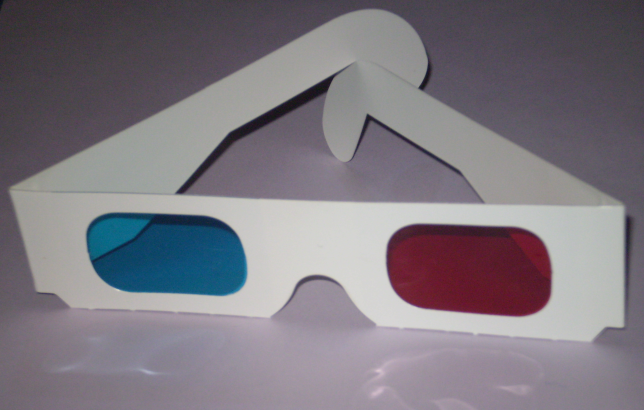
    File:Anaglyph glasses.png
    History of 3D
    1844David Brewster introduces the Stereoscope, a device for taking stereo photographs.
    1851A 3D photo of Queen Victoria is displayed at The Great Exhibition.
    1855The Kinematoscope (Stereo Animation Camera) is invented.
    1915The first anaglyphic movie is produced.
    1922The first anaglyphic movie is shown in theatres (The Power of Love).
    1935The first color 3D movie is produced.
    1947The first Russian 3D movie, Robinson Crusoe, is produced.
    1952Touted as the world's first feature-length 3D movie, Bwana Devil is released in the USA and heralds a short-lived boom in 3D movie production.
    1953Two ground-breaking 3D movies are released: Man in the Dark and House of Wax. The latter is the first 3D movie released with stereo sound, and is directed by André De Toth—who has only one eye.
    1953The 3-D Follies becomes the first 3D film to be cancelled during production, signalling the end of the 3D boom.
    1960September Storm is the first anaglyphic movie released in the Cinemascope format (although technically it's just an expanded non-anamorphic film).
    1981Comin at Ya! is released in anaglyphic format using the "over and under" process (where two views are printted on a single frame, one above the other). This film launches the 3D boom of the 1980s that includes Amityville 3-D, Friday the 13th Part III and Jaws 3-D.
    2009James Cameron's film Avatar, shot with the Fusion Camera System he helped develop, is hailed as the best 3D film to date and helps push 3D towards the mainstream.
    2010The world's first dedicated 3D television channel, South Korea's SKY 3D, launches with side-by-side 1920x1080i resolution.
    2010The Consumer Electronics Show features prototype 3D televisions from most major manufacturers.

    Tuesday, 10 September 2013

    Blog One: Explain which brief you have decided on and give clear reasons why. Give some detail on the genre or sub genre you haven chosen too.

    I have decided to do a film trailer. The reason why I decided to do a film trailer is because I want to stem my ideas into a psychological horror. Psychological horrors are both thrilling and engaging. They manipulate your mind just from a trailer and this is what we aim to do. The horror genre has been frightening audiences for over 100 years. Most would say the first horror film ever made was "Le Manoir du Diable" or "The House of the Devil" which was filmed by Georges Melies of France in 1896.  Charlie Chaplin made a series of short films in the 1920s with one of the most famous being 'The Immigrant'. My aim is to produce a psychological horror.

    A lot of horror films now tend to play on the fact of being 'real' with props such as handheld cameras and locations. Films such as paranormal activity play on this sub genre which attracts a mass audience. This is the aim of our film trailer to attract a mass audience since I think horror as genre attracts a mass audience.

    Things to decide on when choosing a genre:
    Consider your target audience. Are you going to want to attract a mass or niche audience? If so consider which genres attract different target audiences e.g. Comedy = Mass.
    Content of the genre
    Deciding an idea which either fits conventions of the genre or goes against them. Some film makers decide they are going to go against stereotypical conventions which makes the film more unique/ weird. It puzzles the audience into going against the stereotypical film.
    What genre you like the most
    Which genre are you going to decide on could depend on which one interests you the most! horror is one of my favourite  genres because I like to challenge my fears and the experience of going to the cinema in the dark adds to the atmosphere.
    Research into my genre 
    The first handheld horror film (Using handheld camera)
    * Peeping Tom - is about a young man who murders women, using a movie camera to film their dying expressions of terror. Peeping tom is one of the first handheld horrors to be made. The film was mainly influenced by the Alfred Hitchcock film Vertigo, although vertigo was much more commercial because of its lack of gore and distribution.
    *Paranormal Activity - This film centres on a young couple Katie and Micah who are haunted by a supernatural presence in their home. It is presented in the style of 'found footage' from a camera set up by the couple in attempt to photograph what is haunting them. This then goes on as a sequel with a constant theme running through.

    Thursday, 18 July 2013

    Deciding what genre I am going to do,
    - Seminal Piece, - A homage, - Star Image.

    Monday, 24 June 2013

    Intertextuality

    Intertextuality

    Media texts frequently reference other texts. Artists like us to recognise the reference e.g. Robin Thicke (2013) or Lady Gagas Born this way is referenced to Madonna.

    Intertexuality is common in our modern world of music which many will not recognise unless they look closely. For example fashion in 2013 is now playing on traits from fashion from previous years e.g. The 80's.
    Michael jackson has previously been referenced to other celebrities such as chris brown with his similarities to his choreography.
    Core Definition of Intertextuality ; The shaping of texts' meanings by other texts.
    The Notion was introduced by Julia Kristeva. Kristeva argued against the concept of a text as a isolated entity which operates in a self contained manner and states that "Any text is the absorption and transformation of another."
    Intertextuality – Music Videos John Stuarts description of the music video as “incorporating, raiding and reconstructing” is essentially the essence of intertextuality. Using something familiar to the audience may generate both potentially nostalgic associations and new meanings. It is perhaps more explicitly evident in the music video than in any other media form, with the possible exception of advertising (and the Simpsons!)


  • 12. Intertextuality – Music Videos Gentlemen Prefer Blondes (1953) Madonna Material Girl (1985)
  • 13. Robert Palmer’s ‘ Addicted to Love ’ (Donovan 1986), alludes to fashion photography and has been parodied many times for its use of mannequin style females in the band fronted by a be suited Palmer. Shania Twain copied it for her ‘Man I feel like a woman’ (Paul Boyd 1999) Intertextuality – Music Videos

  • Michael Jackson and Chris Brown


    Michael Jackson has had a huge impact for many years. His notorious dancing and moonwalking has become a recognisable characteristic influencing many pop stars.


    Chris has huge reference to Michael Jackson in the video. His dancing, choreography and choice of outfit all has intertexuality to Michael. The song has an infectious catchy beat whilst the video features street fighting in a similar sense to Michael Jacksons Bad and You Rock my world video.

    Intertextuality can be demonstrated in several ways in the media
    - Mimicry ; ( Often this borrowing of a text to link it to a second one is stylistic. THis means that a text will mimic or otherwise copy stylistic features of another text, for example  Rhianna’s “we found love” and Katy Perry’s ” The one that got away” music videos)
    - Marketing of media texts
    - Parody ( Taking the mickey out of different texts for example “scary movie”) ,

    Wednesday, 12 June 2013

    Welcome to my A2 Blog! I will be making a short film at the end of my coursework.